Indian Head Massage: Benefits, Techniques & What to Expect
Learn everything about Indian head massage — its Ayurvedic roots, key techniques, and proven benefits for stress, migraines, and sleep. Find a therapist near you in the US and Canada.
Some of the best wellness treatments are the simplest ones. No complicated equipment, no lengthy preparation. Just skilled hands, a comfortable chair, and a technique that's been refined over thousands of years. Indian head massage is exactly that kind of treatment, and once you've tried it, it's hard to go back to carrying tension in your shoulders like it's a normal thing.
Here's everything you need to know before booking your first session.
What Is Indian Head Massage?
Indian head massage, also known as Champissage, is a treatment that focuses on massaging acupressure points along the head, neck, and shoulders, often using circular massage strokes to improve hair and scalp condition. It originates from an Indian alternative medicine system called Ayurveda, translated as the "science of life," whereby it is believed that the mind and body are intricately connected and can influence one another.
What makes it stand out from other massage types is its accessibility. Unlike full-body massages, Indian head massage is usually performed while the client remains seated and fully clothed, making it convenient and accessible. No changing rooms, no awkward draping. You sit down, and the work begins.
Where Does It Come From?
The roots of this practice go back a long way. Indian head massage was first documented in the texts of Ayurveda around 600 BC. According to Ayurvedic teachings, being healthy means having your life forces in harmony, and massage helps to achieve that goal.
For centuries, it was practiced as part of everyday grooming and family care rituals across India, passed down through generations. It only made its way to the West relatively recently. It was introduced to Western culture by Narendra Mehta in the 1970s. When Mehta came to Britain to study, he was disappointed that the massages he received did not include the head. He then introduced Champissage at the London Olympia, where it became popular on the very first day.
From there, it spread across Europe, North America, and beyond. Today, it's one of the most widely practiced holistic therapies in the world.
What Happens During a Session?
One of the things people appreciate most about Indian head massage is how straightforward the experience is. There's no long intake form or complicated setup.
Before the session begins, the therapist will discuss your specific needs and areas of tension to focus on. You'll then be seated comfortably to allow your therapist full access to the head, scalp, neck, and shoulders.
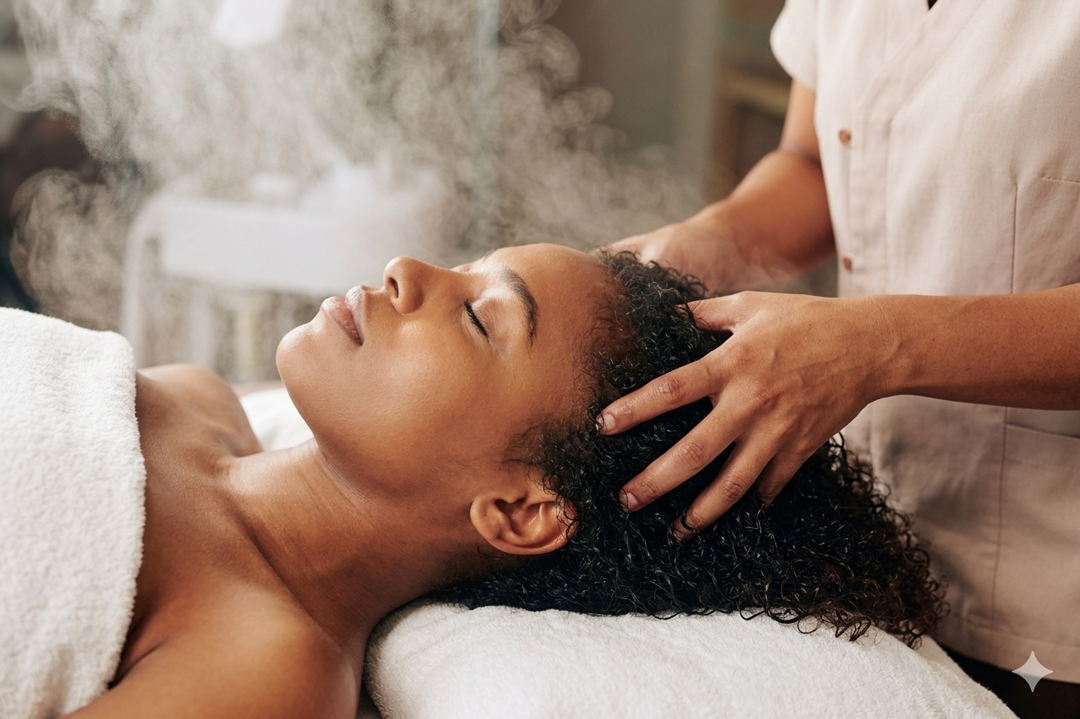
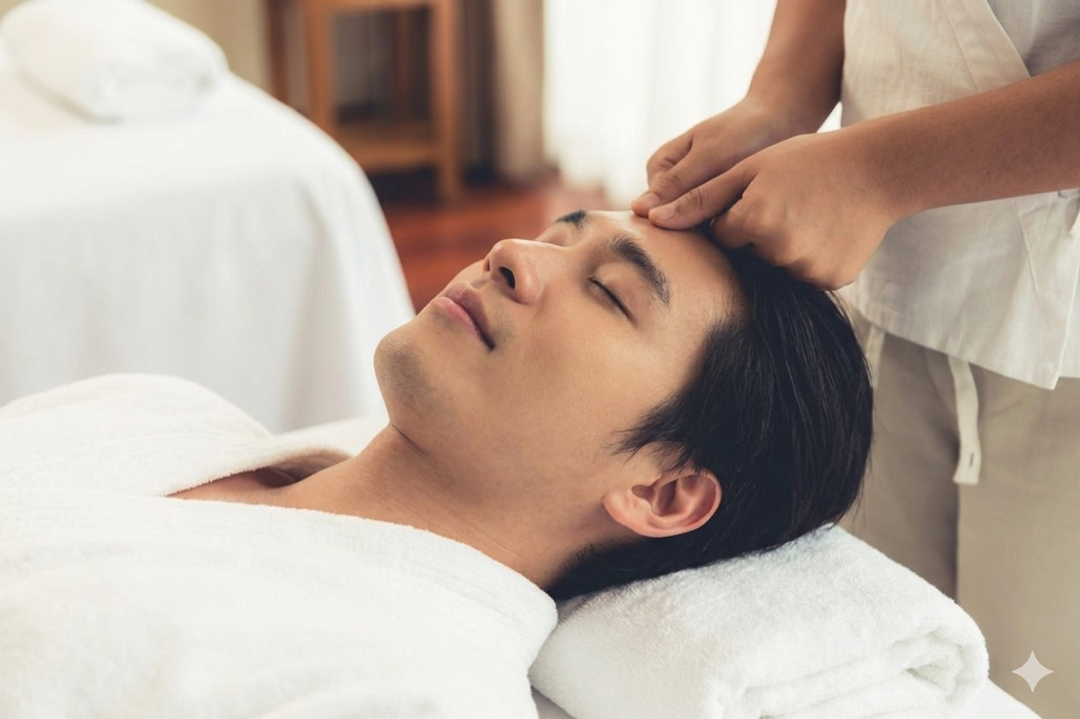
From there, the therapist works through a sequence of techniques. A therapist typically starts with the shoulders and upper back, then gradually moves onto the arms, and finally the head, scalp, and face. During the massage, your therapist might knead and probe the neck and shoulder areas, massage the scalp using squeezing, tapping, or rubbing motions, use facial pressure points to relieve sinus pressure, and press and tug on the ears.
As an optional addition, natural oils are applied to the scalp during the massage to nourish the hair and promote deeper relaxation. If you'd rather skip the oil to keep your hair dry, just let your therapist know beforehand.
Sessions typically run between 30 and 60 minutes, making it an easy fit even on a busy afternoon.
The Benefits: Why People Keep Coming Back
Stress and Anxiety Relief
This is the big one. One of the primary benefits of Indian head massage is its ability to alleviate stress and tension. The treatment provides a deep sense of relaxation, improving mental wellbeing, and can also help to reduce feelings of anxiety and depression. Most clients describe walking out feeling noticeably lighter, both physically and mentally.
Headache and Migraine Relief
Tension in the mid-back, neck, and head can cause headaches and migraines. By applying rhythmic pressure and gentle strokes, the massage improves blood circulation and eases muscle stiffness, which can help reduce headaches and neck pain. For people who experience frequent tension headaches, regular sessions can make a real difference over time.
Better Sleep
According to ancient Ayurvedic wisdom, the benefits of head massage include pleasant sleep obtained from attending to one's head with oil. Modern experience backs this up. Many clients report sleeping more deeply the night after a session, likely because the nervous system has had a chance to genuinely switch off.
Healthier Hair and Scalp
Massaging the scalp and head provides nourishment and delivers oxygen to the hair follicles, helping to stimulate hair growth. Research has also shown that this type of massage can increase hair thickness by stretching the cells of the follicles, stimulating them to produce thicker, healthier hair.
Improved Circulation
Indian head massage can also help to bring oxygen and nutrients to cells. Better circulation in the scalp and upper body means your tissues get more of what they need to function well, and you're likely to notice the difference in how you feel day to day.
What to Expect After Your Session
Most people feel relaxed and a little drowsy right after, which is completely normal. Following the massage, a period of rest and relaxation is highly recommended. This allows the oil to deeply penetrate the scalp and hair, maximizing the therapeutic benefits.
Drink plenty of water, take it easy for the rest of the day if you can, and try to avoid washing your hair immediately if oil was applied. The nutrients need a little time to absorb.
How Often Should You Go?
For general wellbeing, once or twice a month is a good starting point. If you're dealing with chronic tension, regular headaches, or high stress levels, you might benefit from weekly sessions until things settle down, then scaling back to maintenance visits.
Is It Right for You?
Indian head massage works well for a wide range of people. It's particularly well-suited for anyone dealing with tension headaches, neck and shoulder stiffness, stress or anxiety, poor sleep, or a dry and irritated scalp. Since it's done fully clothed and doesn't require lying down, it's also a comfortable option for people who find full-body massage less accessible.
That said, if you have any recent head or neck injuries, skin conditions on the scalp, or are pregnant, it's always worth checking with your doctor first.
Find a Head Massage Near You
Indian head massage is one of those treatments that's hard to fully appreciate until you've actually experienced it. The combination of physical tension release and genuine mental calm is difficult to replicate anywhere else.